
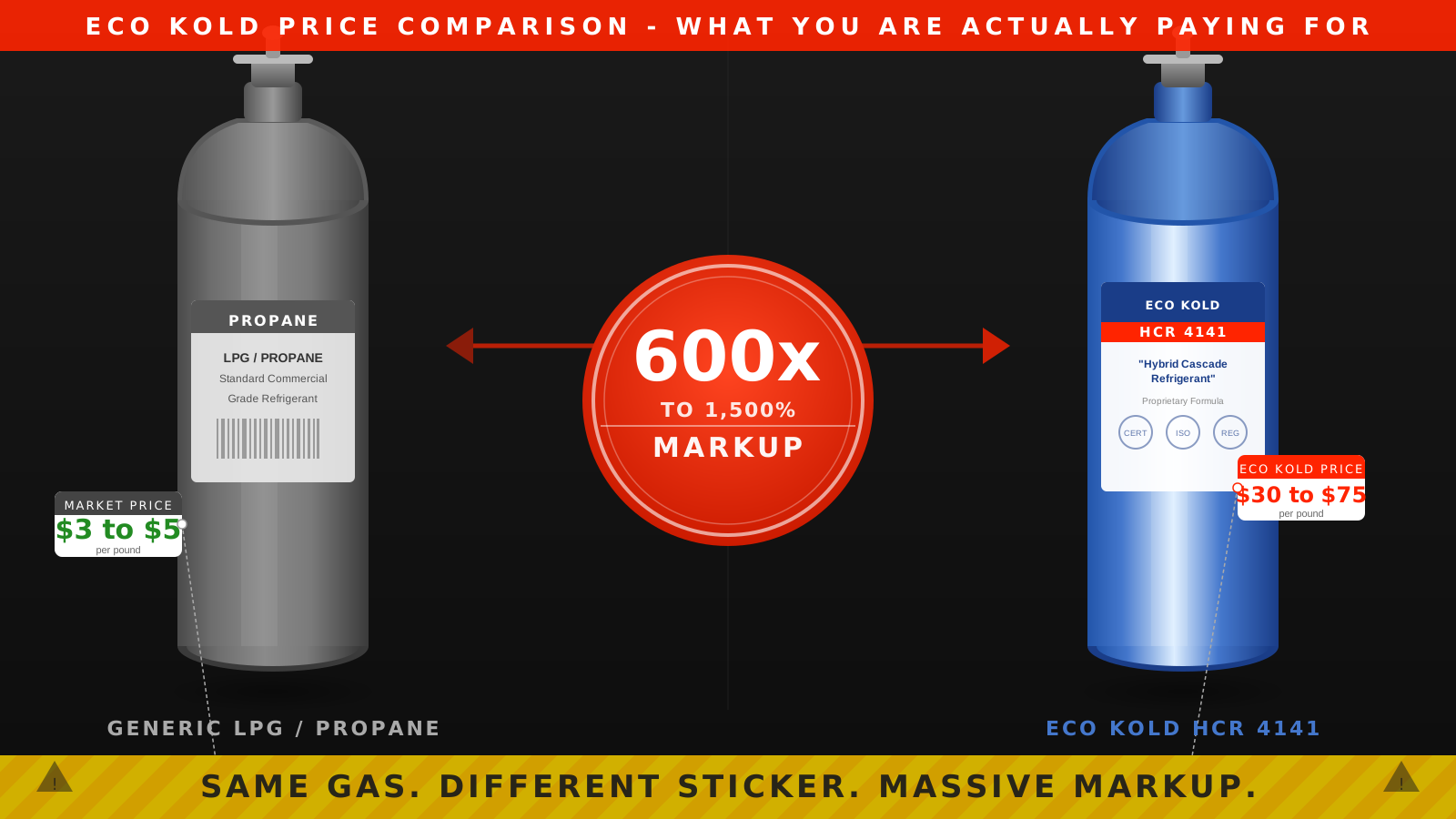
Eco Kold HCR 4141 looks like a high-tech refrigerant. It is not. It is plain propane, the same gas in your barbecue tank, repackaged with a new sticker and sold for up to 15 times the price. (sources: BHCR marketing, Monterrey Study) The label hides it. The price markets it. The chemistry confirms it.
1. What Is Actually in the Can
Propane and isobutane. Two cooking gases. That is it. (sources: Monterrey Study, BHCR marketing) They cool things efficiently. They also catch fire easily.
The technical name for them is "hydrocarbon refrigerants." Their zero Ozone Depletion Potential (ODP) sounds great until you remember the bigger problem is the flammability. Marketing materials call Eco Kold "natural" and "eco-friendly." Chemically, it is a hydrocarbon blend (HCR 4141) composed of propane (R-290) and isobutane (R-600a). The HVAC industry classifies refrigerants by flammability and toxicity. Non-flammable refrigerants like R-410A are Class A1. Hydrocarbons are Class A3. That is the highest flammability rating. ( ASHRAE Standard 34 ) It is not a small difference.
ASHRAE Standard 34
Standard 34 "A3 = Highly Flammable."
2. What the Marketing Claims Say vs. What the Evidence Shows
The company makes three big claims. Each one falls apart under scrutiny. The table below shows you the claim, then the reality.
| BHCR's Claim | What the Evidence Shows |
|---|---|
| Eco Kold is a direct, drop-in replacement for R-410A and R-22 requiring no system modifications. | Highly flammable (A3) refrigerants cannot be used as drop-in replacements in systems designed for non-flammable refrigerants. Doing so poses severe safety risks and violates federal SNAP regulations. |
| Provides up to 36% energy savings due to superior thermodynamic properties. | While hydrocarbons can improve efficiency, claims of 36% savings lack independent verification from AHRI-certified laboratories in standardized, double-blind tests across various climates. |
| The product is entirely safe and non-toxic, with a low flammability risk in standard applications. | Hydrocarbon blends like HCR 4141 are classified as highly flammable (A3). A leak in an indoor unit exposes the home to an explosive fuel-air mixture, which can be ignited by standard HVAC contactors. |
[1] See EPA SNAP Rule 21 and the Clean Air Act Section 612 prohibition on unapproved retrofits. (sources: EPA SNAP Rule 21, EPA SNAP Rule 27)
[2] Energy savings claims often rely on single-unit case studies rather than comprehensive AHRI Standard 210/240 testing. (UTP Study) (verification methodology)
[3] Systems designed for A1 refrigerants lack the sealed electrical components and ventilation requirements necessary for A3 systems. (sources: EPA R-22a Q&A , Monterrey Study)
3. Why "Drop-In" Is a Lie That Can Burn Your House Down
The core sales pitch is simple. Just pour Eco Kold into your existing R-410A system. No changes needed. Done. That pitch ignores basic safety engineering.
Your R-410A system has an electrical contactor outside and a blower motor inside. Both produce sparks. If propane leaks near either component, one thermostat click can cause an explosion. This is not a hypothetical. It is why the EPA and Underwriters Laboratories (UL) require spark-proof components and special ventilation in any system that handles A3 refrigerants. ( EPA R-22a Q&A ) None of that equipment is in your current system. The installer who poured in Eco Kold left you with a barbecue bomb in your attic.
EPA SNAP Q&A R-22a
EPA Q&A "EPA has not found any flammable hydrocarbon refrigerants acceptable for use in existing air-conditioning systems designed for use with HCFC-22, as use of flammable refrigerants as a retrofit... presents risks to consumers, equipment, and service technicians..."
4. Who Pays When Something Goes Wrong
You do. The installer does. The company that sold it does not.
When an HVAC contractor installs an unapproved, highly flammable substance in a residential or commercial system, they carry direct liability under federal and civil law. Homeowners face a different problem. The installer violated federal code. You paid for the install.